
Market Segmentation Made Practical: Find and Serve Better Customers
Market segmentation is the simple idea that not every customer wants the same thing. When you group people by meaningful needs, behaviors, and buying situations, your marketing becomes clearer, your product decisions become sharper, and your sales conversations stop sounding generic.
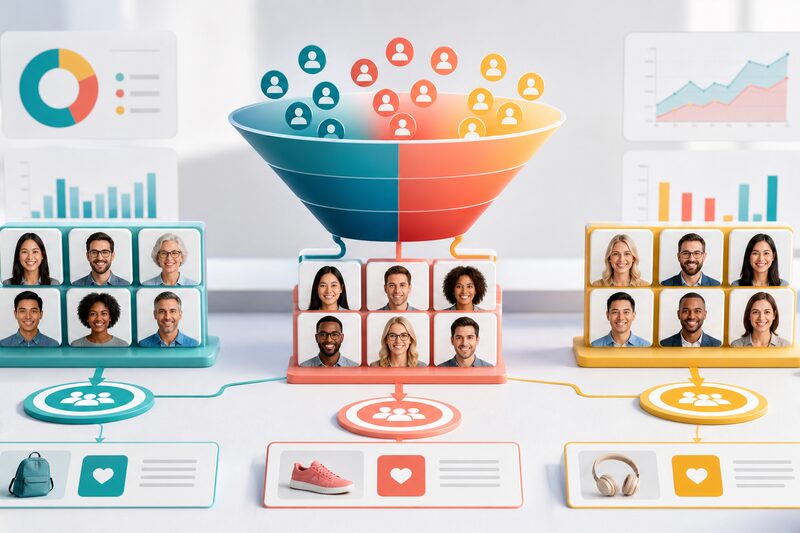
A lot of businesses talk about "the customer" as if one average person represents everyone who might buy. That is rarely true. A student buying a budget app subscription, a founder choosing software for a team, and a corporate manager comparing vendors can all need the same category of product, but they are not buying for the same reason. Their budget, urgency, objections, language, and decision process can be completely different.
That is where market segmentation helps. It gives you a clean way to divide a broad market into smaller groups that share something important. The goal is not to create cute labels or overcomplicated personas. The goal is to make better choices: which customers to focus on, what message to use, what offer to build, which channels to test, and what problems deserve product attention.
Why Market Segmentation Matters
Without segmentation, marketing tends to become broad and expensive. You create one message for everyone, place it in channels where only some people care, and then wonder why conversion rates are weak. Segmentation makes the work more focused. It helps you stop treating all traffic, leads, subscribers, and buyers as equal.
Good segmentation can improve almost every commercial decision. A product team can see which features matter to the best-fit customers. A content team can write articles and emails around specific problems instead of vague topics. A paid ads team can build cleaner landing pages. A sales team can prepare better discovery questions. Even support teams benefit because they can anticipate what each customer group usually misunderstands.
The real value is relevance. People respond when they feel a message was written for their situation. A small business owner who is worried about cost needs a different explanation than an enterprise buyer who is worried about risk and approval. Both may buy, but they need different proof.
The Four Segmentation Lenses
Most segmentation methods fit into four broad lenses: who the customer is, where they are, why they buy, and how they behave. You do not have to use all of them at once. In fact, the strongest segments often come from combining only two or three useful signals.
Common Types of Market Segmentation
There is no single best segmentation type. The right approach depends on the decision you need to make. If you sell winter clothing, geography matters. If you sell business software, company size and role may matter more. If you sell a habit-forming app, behavior and motivation may be the strongest signals.
| Segmentation type | What it groups by | Best used when | Watch out for |
|---|---|---|---|
| Demographic | Age, income, education, family status, job role, or similar traits. | You need a quick starting point for consumer audiences or role-based campaigns. | Demographics can describe people without explaining why they buy. |
| Geographic | Country, region, city, climate, language, and local behavior. | Location changes need, pricing, shipping, seasonality, or compliance. | Two customers in the same city may still have very different motivations. |
| Psychographic | Values, lifestyle, personality, interests, priorities, and beliefs. | Messaging, brand positioning, and creative strategy need emotional precision. | It can become vague unless backed by interviews, surveys, or behavior. |
| Behavioral | Purchase history, product usage, search intent, loyalty, cart behavior, and engagement. | You want stronger lifecycle marketing, retention, upsell, or onboarding. | Behavior shows what happened, but you still need to understand why. |
| Firmographic | Company size, industry, revenue, funding stage, region, and technology stack. | You sell B2B products and need to qualify accounts or tailor sales outreach. | Companies do not buy by themselves; people inside them still have goals and fears. |
| Needs-based | The job the customer is trying to get done and the pain they need solved. | You want product, pricing, and messaging decisions tied directly to customer value. | It takes more research than simple labels, but it is often more useful. |
A Practical Step-by-Step Segmentation Process
Segmentation becomes easier when you treat it like a decision tool, not a branding exercise. Start with the business question. Are you trying to increase conversions, reduce churn, enter a new market, improve email campaigns, or decide which product features to build next? The segments you create should help answer that question.
1. Define the market and the decision
Be specific about the market you are segmenting. "Small businesses" is too wide. "US-based independent clinics choosing appointment scheduling software" is much better. Then define the decision. You might be choosing a landing page message, a pricing package, a channel strategy, or a new feature priority.
2. Gather useful data
Start with what you already have: analytics, search queries, CRM notes, purchase history, support tickets, reviews, sales calls, survey answers, and email engagement. If you work with mailing lists, clean data matters. A messy list can hide real patterns, so tools like the Email List Cleaner can help remove obvious noise before you study engagement.
3. Look for patterns that change behavior
Do not segment only because a difference is easy to see. Segment because the difference changes how people choose. If two groups respond to the same message, buy at the same price, and use the product in the same way, they may not need separate segments. If they object for different reasons or value different outcomes, segmentation is useful.
4. Build simple segment profiles
A good segment profile should fit on one page. Include the segment name, the core need, common triggers, main objections, preferred proof, useful channels, and the message that usually lands. Keep it practical. If a sales, product, or content teammate cannot use the profile, it is probably too abstract.
5. Prioritize segments
Not every segment deserves equal attention. Some are too small. Some are expensive to reach. Some love your product but have no budget. Others look attractive but create heavy support costs. Prioritization helps you focus on the segments where customer value and business value overlap.
The Segment Opportunity Map
A simple way to choose where to focus is to compare customer urgency with business fit. Urgency tells you how strongly the group feels the problem. Business fit tells you whether the segment is reachable, profitable, supportable, and aligned with your product.
What Makes a Segment Worth Targeting?
A segment can sound interesting and still be a poor target. Before you invest in campaigns, content, product changes, or sales plays, check whether the segment passes a few practical tests.
Can you identify them?
You should be able to recognize the segment from data, behavior, firmographics, survey answers, or a clear buying situation. If no one can tell who belongs in the segment, it will be hard to target.
Can you get in front of them?
A segment is more useful when it has discoverable channels: search terms, communities, trade publications, partner networks, events, newsletters, or ad targeting signals.
Can they support the business?
The segment should be large enough, profitable enough, or strategically important enough to justify attention. A tiny segment can still matter if it is high-value or influential.
Do they need a different approach?
If a segment does not need a different message, offer, channel, feature, or sales motion, it may not be worth separating from the rest of the market.
From Segments to Messages
Segmentation is only useful when it changes what you do. Once you know who the segment is and what they care about, connect that insight to a specific message, offer, and proof point. This is where many teams stop too early. They create a persona and never turn it into campaign decisions.
For example, imagine you run an email productivity tool. One segment might be "freelancers who send client proposals." Their trigger is usually a new lead or follow-up. Their promise is faster, more professional outreach. Their proof might be a polished template or higher reply rate. A useful campaign could include proposal email templates, a subject line guide, and a simple call to action. Tools like the Email Subject Checker and Email Template Builder fit naturally into that workflow.
A Simple Example of Market Segmentation
Let us say a company sells a privacy-focused email utility. At first, the market looks like "people who need email tools." That is too broad to guide decisions. After reviewing search terms, feedback, and usage behavior, the company might find three useful segments.
| Segment | Main need | Message angle | Best proof |
|---|---|---|---|
| Privacy-first users | Avoid exposing their personal inbox when signing up online. | Protect your main inbox from spam, tracking, and unnecessary risk. | Clear privacy explanation and simple safety guidance. |
| Marketers and operators | Test forms, templates, subject lines, and campaigns without clutter. | Keep marketing work cleaner, faster, and easier to check. | Workflow examples, checklists, and email quality tools. |
| Developers and QA testers | Run signup and notification tests without using personal accounts. | Test email flows quickly while keeping accounts organized. | Reliable test cases, fast generation, and easy repeat use. |
Notice that the product may be similar for all three groups, but the reason to care is different. If the company uses one generic message, it will miss the emotional reason each segment pays attention.
How Segmentation Improves Email Marketing
Segmentation is especially powerful in email marketing because inbox attention is limited. People ignore messages that feel irrelevant, even when the offer is good. A segmented list lets you send fewer, better messages instead of pushing the same announcement to everyone.
You can segment email audiences by lifecycle stage, purchase history, engagement level, content interest, industry, or problem type. A new subscriber may need education. A trial user may need activation help. A past buyer may need a useful upgrade explanation. A quiet subscriber may need a lighter re-engagement message or no message at all.
Before sending to a large list, check the basics. Clean obvious list issues, write a clear subject, and make the message easy to read. The Email Readability Checker can help simplify heavy copy, while the Email Spam Checker can catch wording that may look suspicious or overly aggressive.
Common Market Segmentation Mistakes
Segmentation is useful, but it can go wrong when teams confuse detail with insight. More segments are not always better. A giant persona document is not helpful if it does not change action.
Creating segments from stereotypes
Age, gender, location, or job title can be useful, but they can also mislead. Two people with the same demographic profile may have different goals. Use simple labels as a starting point, then validate them with actual behavior, interviews, and buying context.
Ignoring profitability and support cost
A segment can convert well and still be poor for the business if it churns quickly, requires heavy support, or always needs discounts. Look beyond top-line conversion. Compare acquisition cost, retention, average order value, support load, and referral potential.
Freezing segments forever
Markets change. Customer expectations change. Channels get more expensive. Competitors reposition. Review your segments regularly, especially after product launches, pricing changes, major campaigns, or shifts in customer behavior.
How to Know Your Segmentation Is Working
Good segmentation should show up in results. You should see clearer campaign performance, better conversion rates, more useful sales conversations, improved retention, or stronger product adoption. The exact metric depends on the goal you chose at the start.
- For acquisition: track conversion rate, cost per qualified lead, landing page engagement, and channel efficiency.
- For email: track open rate, click rate, reply rate, unsubscribe rate, spam complaints, and revenue per segment.
- For product: track activation, feature adoption, retention, expansion, and support topics by segment.
- For sales: track win rate, sales cycle length, deal size, objections, and close reasons by segment.
The point is not to prove your first segmentation model was perfect. The point is to learn which groups respond, which messages work, and where the business should focus next.
Frequently Asked Questions
What is the difference between market segmentation and target marketing?
Market segmentation divides a broad market into meaningful groups. Target marketing happens after that, when you choose which segments to focus on and build specific campaigns, offers, or products for them.
How many market segments should a business have?
There is no fixed number. Many small businesses can start with three to five useful segments. The right number is the smallest number that helps you make better decisions without creating unnecessary complexity.
Are buyer personas the same as market segments?
Not exactly. A segment is a group of customers with shared traits or needs. A persona is a representative profile that helps teams understand one segment in a more human way. Personas should be based on real segment data, not guesses.
Can small businesses use market segmentation?
Yes. Small businesses often benefit the most because they cannot afford to market to everyone. Even a simple segmentation model can help them choose better messages, channels, and offers.
What is the most useful segmentation method?
Needs-based and behavioral segmentation are often the most actionable because they connect directly to why people buy and what they do. Demographic, geographic, and firmographic data can still be useful when they help identify or reach those groups.
Final Takeaway
Market segmentation is not about putting customers into neat boxes for the sake of it. It is about seeing the market clearly enough to make better choices. When you know which customers have the strongest need, how they think, where they spend attention, and what proof they trust, your marketing becomes more useful and less noisy.
Start simple. Pick one business decision, gather the best data you have, find the patterns that change buying behavior, and build a few practical segment profiles. Then test your messages and refine the model as real customers respond. That is how segmentation turns from a marketing concept into a growth tool.